
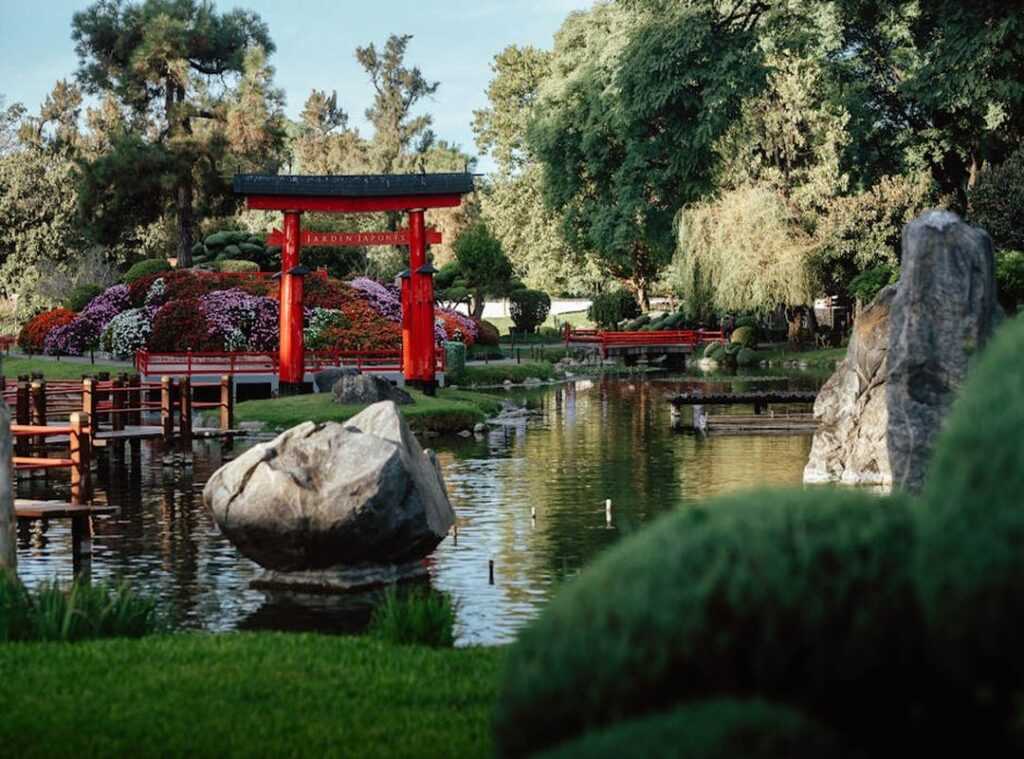
Feeling overwhelmed by the chaos around you? You’re not alone. Many of us crave a peaceful escape, a serene corner in our backyard to unwind and breathe.
This is where japanese garden design comes in. It’s not just about raking sand or placing a rock here and there. It’s about creating a space that feels both calming and inviting, using principles that have stood the test of time.
You might think it’s complex or reserved for sprawling estates, but that’s a misconception. I’ve spent years demystifying these gardens for modern homes.
This article will guide you through the essentials, making it accessible for any size garden. Say goodbye to mystery and hello to tranquility. Ready to transform your outdoor space with ease?
The Philosophy of Peace: Evoking Emotion in Design
When I think about japanese garden design, it’s not just about placing plants and rocks. It’s a philosophy. A way to evoke feelings of peace and tranquility.
Ever walked through a garden and felt instantly calmed? That’s intentional.
to the core principles. First up, Kanso. It’s the essence of “less is more.” Clean lines, uncluttered spaces, and a limited palette of materials.
You know that soothing vibe of a minimalist room? Same idea here. By stripping away the excess, you allow nature’s raw beauty to shine.
Next, Shizen. This is about naturalness. Forget perfect symmetry.
Instead, embrace organic curves and asymmetry. Think of a winding stream or the natural fall of a branch. It’s about creating a scene that feels unforced and real.
Just like life, not everything needs to be perfectly aligned.
Then there’s Wabi-Sabi, probably my favorite. Finding beauty in imperfection. Moss-covered stones or weathered wood show the passage of time.
They tell a story. Like a well-loved book, the flaws add character. Isn’t that what makes them beautiful?
Finally, Shakkei. It’s about borrowing scenery. Making your garden feel larger by incorporating external views.
Like framing a neighbor’s stunning tree or a distant hill to become part of your composition. It’s a clever trick that extends the boundaries of your space.
Want to explore more design ideas? Check out this mediterranean landscaping luxurious look. It might just inspire your next garden project.
The Palette: Crafting a Japanese Garden
Creating a Japanese garden is like painting with nature. You need the right materials. Stone, water, plants, and ornaments form the backbone of this art. to these elements.
Stones (Ishi) are the bones of the garden. They provide structure and stability. Tall vertical stones can mimic mountains.
Low horizontal stones often represent islands. Then there are arching stones, which might remind you of bridges. Pathways, known as tobi-ishi, play a key role too.
They guide how you move and how fast you go. It’s all about pacing yourself, isn’t it?
Water (Mizu) symbolizes life and purity. You could go big with a pond or stream. But if space or maintenance worries you, consider a bamboo fountain (shishi-odoshi).
It adds sound and movement. Or try a dry riverbed of raked gravel (karensansui). It’s low-maintenance and still captures the essence of water.
Plants (Shokubutsu) bring life and change. It’s not just about flowers. It’s about structure, texture, and how they shift with the seasons.
This living element keeps the garden changing. I’ll get into more detail about plants later, but for now, just remember: they’re chosen for more than just their blooms.
Ornaments (Tenkebutsu) add the human touch. Less is more here. Stone lanterns (tōrō) and water basins (tsukubai) are traditional choices.
They serve as focal points and have specific roles. Place them thoughtfully to boost the garden’s aesthetic.
For a deeper understanding of japanese garden design, explore further resources. This is just the start of your journey into crafting a serene space. Remember, each element has its place and purpose.
Get these right, and you’ll have a garden that feels both timeless and personal.
Your Living Palette: Plants with Purpose
When you’re diving into japanese garden design, it’s all about picking the right plants. First, think about the backbone of your garden. Evergreens like Japanese Black Pine and Yew are your go-to.
These plants don’t just fill up space. They give your garden a sense of permanence and structure, making sure it looks alive even in winter. Who doesn’t want that?
Now, let’s talk about what really steals the show. The seasonal stars. Japanese Maples are the divas of the garden world.
Bloodgood and Coral Bark varieties? They’re like nature’s fireworks, putting on a show with their lively colors and delicate forms. They change with the seasons, giving your garden fresh looks year-round.
Of course, you don’t want an explosion of color everywhere. flowering accents come in. Azaleas and Camellias are perfect for controlled bursts. They add just the right amount of pop without overwhelming everything else.
It’s like adding a splash of paint to a canvas (but not dumping the whole bucket).
Don’t forget the ground. It’s not just a backdrop. Ground-level plants like moss offer a serene, carpet-like surface.
But if you want movement and texture, consider Japanese Forest Grass or dwarf Mondo Grass. They sway gently, adding life to the stillness.
For more garden inspiration, check out the victorian garden revival step by step. It’s got some classic touches that might just spark a few ideas. Remember, your garden is an expression of you.
Make sure it feels authentic and full of character. That’s what makes a garden truly unforgettable.
Turn Your Yard into Zen: The 4-Step Guide
Gardening doesn’t have to be rocket science. Let’s break it down. Japanese garden design can be an art form, but it’s achievable with the right steps.
Step 1: Observe and Plan. Spend time in your yard. When does the sun hit your patio? Note these things and sketch out a basic layout. This isn’t just busywork (it’s) the backbone of your project.
Step 2: Set the Stones. The hardscape is your canvas, so start with it. Place those feature rocks and lay out paths or dry riverbeds first.
It grounds the space (pun intended) and gives you a solid foundation.
Step 3: Plant with Purpose. Here’s where the magic happens. Start with the largest trees and shrubs, then fill in with smaller plants.
Think about how big they’ll grow. Create balanced, asymmetrical groupings. This isn’t just about aesthetics; it’s about long-term harmony.
Step 4: Add the Final Details. This is the cherry on top. Place a single ornament like a lantern.
Add gravel or mulch to tie it all together and keep those pesky weeds in check.
And there you have it. Your yard’s transformation doesn’t have to be complicated. Just follow these steps and you’ll be sipping tea in your own piece of paradise in no time.
Start Your Garden Transformation
You’ve wanted to turn your yard into a sanctuary, right? The magic lies in japanese garden design. Simplicity, naturalness, and embracing imperfection will transform your space into a personal refuge.
It’s not some daunting task. The process is simple and rewarding if you follow the steps.
Imagine stepping outside, seeing your tranquil garden, and feeling peace wash over you. Ready to start? Take that first step.
Go outside. Observe. Imagine the possibilities.
Need guidance? Check out the resources at decadgarden.com.co. Your tranquil garden awaits.
Why wait any longer? Begin your transformation today.

 Ask Marta Draperenzon how they got into decadent garden landscaping styles and you'll probably get a longer answer than you expected. The short version: Marta started doing it, got genuinely hooked, and at some point realized they had accumulated enough hard-won knowledge that it would be a waste not to share it. So they started writing.
What makes Marta worth reading is that they skips the obvious stuff. Nobody needs another surface-level take on Decadent Garden Landscaping Styles, Interior Design Inspirations, Browse and Learn. What readers actually want is the nuance — the part that only becomes clear after you've made a few mistakes and figured out why. That's the territory Marta operates in. The writing is direct, occasionally blunt, and always built around what's actually true rather than what sounds good in an article. They has little patience for filler, which means they's pieces tend to be denser with real information than the average post on the same subject.
Marta doesn't write to impress anyone. They writes because they has things to say that they genuinely thinks people should hear. That motivation — basic as it sounds — produces something noticeably different from content written for clicks or word count. Readers pick up on it. The comments on Marta's work tend to reflect that.
Ask Marta Draperenzon how they got into decadent garden landscaping styles and you'll probably get a longer answer than you expected. The short version: Marta started doing it, got genuinely hooked, and at some point realized they had accumulated enough hard-won knowledge that it would be a waste not to share it. So they started writing.
What makes Marta worth reading is that they skips the obvious stuff. Nobody needs another surface-level take on Decadent Garden Landscaping Styles, Interior Design Inspirations, Browse and Learn. What readers actually want is the nuance — the part that only becomes clear after you've made a few mistakes and figured out why. That's the territory Marta operates in. The writing is direct, occasionally blunt, and always built around what's actually true rather than what sounds good in an article. They has little patience for filler, which means they's pieces tend to be denser with real information than the average post on the same subject.
Marta doesn't write to impress anyone. They writes because they has things to say that they genuinely thinks people should hear. That motivation — basic as it sounds — produces something noticeably different from content written for clicks or word count. Readers pick up on it. The comments on Marta's work tend to reflect that.