
You know that feeling when you walk into a room and something’s just… off? Everything looks fine, but the space feels stagnant or even stressful. You’re not alone.
Many of us struggle with spaces that don’t quite feel right. But what if I told you there’s a way to fix it without getting bogged down in complex rules? This article breaks down the home feng shui basics into simple, practical steps.
I’ve spent years diving deep into how our environment affects our mood, so you can trust this isn’t just fluff. You’ll learn the core principles of Feng Shui, making your living space look good but feel good too. Ready to transform your home and boost your well-being?
Feng Shui: More Than Just Tidying Up
Feng Shui is more than just a fancy way to tidy your space. It’s an ancient art of arranging your environment to let positive energy, or “Qi” (pronounced ‘chee’), flow freely. You’ve probably wondered if your living room feels off, right?
Qi is like that invisible vibe, the life force of your home. The goal is to let it glide through your space like a gentle stream, not get stuck like a stagnant pond.
Now, don’t confuse Feng Shui with minimalism or simple decluttering. Sure, getting rid of clutter is a start. It’s like clearing the path for Qi.
But Feng Shui is about the intentional placement of what remains. Think of it as setting up a garden. You wouldn’t just toss plants around, you’d place them to create harmony and balance.
If you’re tackling small spaces, effective decluttering is your first step. And yes, there’s a great resource out there for that. Once you’ve got the clutter out, you can focus on arranging things to let Qi flow smoothly.
Trust me, when you get it right, your home feels different, almost alive with energy.
The Energy Triad: Your Home’s Secret Sauce
Forget memorizing a million feng shui rules. You only need three pillars to boost your home’s energy. The first one? The Commanding Position.
It’s the power seat, the throne of your room. Picture your living room. The main sofa goes diagonally opposite the door, with a solid wall behind it.
Why? Because it gives you a sense of security. You see who walks in, and that’s relaxing.
It’s like being the king or queen of your castle.
Next, the Five Elements. These are Wood, Fire, Earth, Metal, and Water. They sound mystical but are actually down-to-earth.
Wood is your coffee table, Fire is a candle or those red pillows you love, Earth is in your ceramic pots, Metal can be a lamp, and Water is reflected in a mirror or wavy patterns. Balance these elements, and you get a room that feels alive. Each element ties to colors and materials, and mixing them well is like cooking a great dish.
Delicious for the eyes.
Finally, we have Yin and Yang. It’s all about balance. Yin is rest: soft textures, dark colors, curved shapes.
Yang is activity: bright lights, bold colors, hard surfaces. You don’t want a room that’s too calm or too chaotic. Harmonize them.
That’s the real challenge. If you’re looking for more home feng shui basics, dive deeper. It’s fascinating how little changes can make a big difference.
Your space can feel just right.
Feng Shui Your Living Room: A Practical Guide
to this. You want your living room to feel inviting and balanced, right? Well, the first step is simple but non-negotiable: clear the clutter.
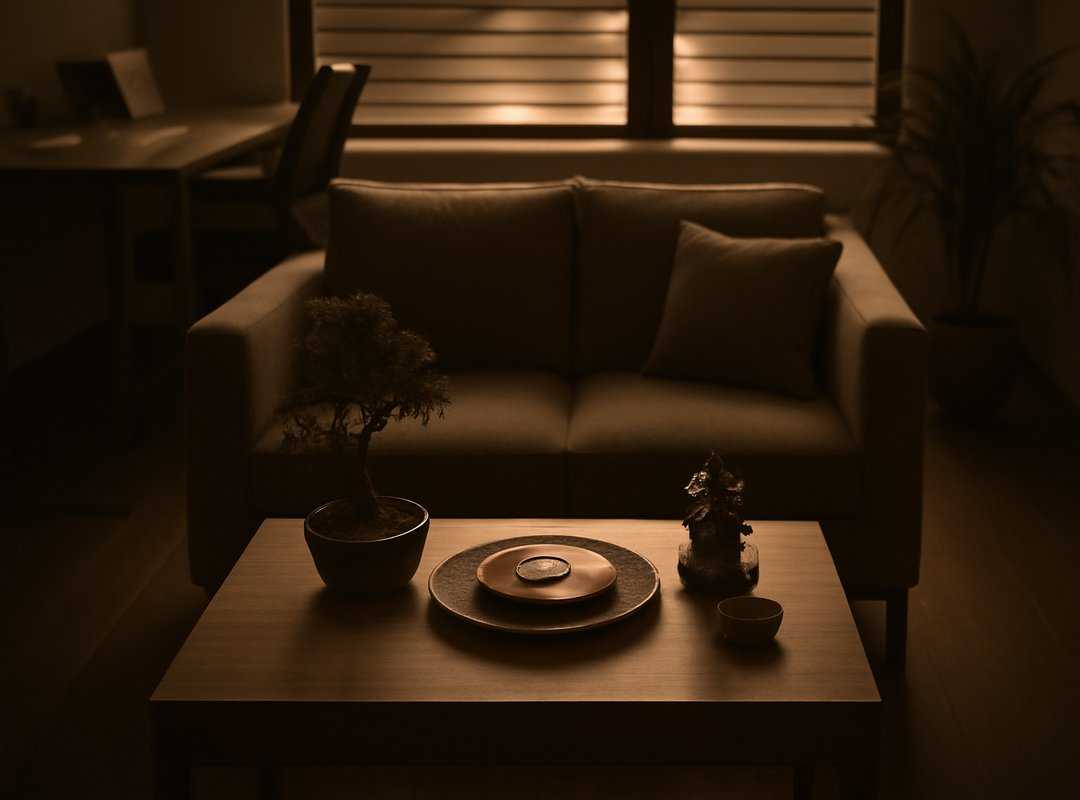
I can’t stress this enough. Look around. Are your pathways and flat surfaces clear?
Under the couch, too. A clutter-free room is the starting point for good Qi flow.
Now, onto your sofa. The “Commanding Position” is key here. It’s where you can see the door without being in direct line with it.
If your layout makes this impossible, don’t sweat it. Grab a mirror. Place it strategically so you can see the entrance.
This simple tweak can change the room’s energy a lot.
Next, let’s talk elements. The five elements in feng shui are wood, fire, earth, metal, and water. Look around your room.
Got them all? If not, here’s a quick fix. Add a potted plant for wood.
A candle works for fire. Earth? Think clay pots or terracotta tiles.
Metal could be a sleek sculpture. And for water, a small fountain or even a glass vase can do wonders. It’s all about balance.
Light and air come next. Natural light is your best friend, so keep those windows clean. Use sheer curtains to let light in without sacrificing privacy.
Trust me, you’ll feel the difference.
And don’t forget to layer your lighting. Overhead, task, ambient. Each plays a role in controlling the room’s vibe.
Finally, furniture arrangement. This one often gets overlooked. Arrange your seating to encourage conversation, not just TV watching.
You want people to face each other, not just screens. Create a natural flow. People should move easily without bumping into stuff.
It’s all about creating a space that feels connected.
Thinking about revamping more than just the living room? Check out these simple steps to create a minimalist home. Minimalism often complements feng shui beautifully.
The less clutter, the better the energy. And who doesn’t want a more peaceful, balanced home?
So, there you have it. Your living room can be a sanctuary with just a few tweaks. Remember, these aren’t just home feng shui basics.
They’re tools for a better living space. Why not start today?
Quick Fixes for Common Living Space Problems
Ever walked into your living room and felt like you were hit with chaos? It’s not just you. This is a classic case of “Sha Qi” (sharp energy) attacking your space.
Every sharp corner from your furniture might be pointing daggers at your peace. Softening these with a plant or a tasteful throw can work wonders. And those cables everywhere?
Get them organized. Trust me, it makes a difference.
Now, on to the spaces that feel, well, dead. The kind where you step in and just want to step right back out. We need life!
Add lively plants. Let the fresh air sweep in by opening windows every day. If you’re feeling bold, a small water feature can breathe life into a room.
This is one of those home feng shui basics you can’t ignore.
Lastly, the dreaded unwelcoming entryway. It’s like the front door with a “do not enter” vibe. The front door isn’t just a door; it’s the mouth of Qi (energy for the uninitiated).
Shoes, bags, clutter. All these do is block the good vibes from rolling in. Clear the path.
Let the energy flow naturally.
Here’s a pro tip: Regularly tweaking your space keeps energy fresh and makes your home genuinely inviting. Why live with stale vibes when a few small changes can transform your space into a serene retreat?
Create Your Own Sanctuary
Living in a space that doesn’t nurture your well-being is frustrating. But you can change that. By embracing home feng shui basics.
Things like Qi flow and the commanding position (you’re) not dabbling in superstition. This is about crafting an environment that feels secure, comfortable, and positive. Want proof?
Try it this weekend. Move your sofa. Declutter that messy entryway.
Feel the difference in the room’s energy instantly. You deserve a harmonious home that supports you. Ready to transform your space?
Start small, feel the shift, and enjoy the balance. Make your home the sanctuary you need. One step at a time.

 Charles Belleriono writes the kind of interior design inspirations content that people actually send to each other. Not because it's flashy or controversial, but because it's the sort of thing where you read it and immediately think of three people who need to see it. Charles has a talent for identifying the questions that a lot of people have but haven't quite figured out how to articulate yet — and then answering them properly.
They covers a lot of ground: Interior Design Inspirations, Highlight Hub, Decadent Garden Landscaping Styles, and plenty of adjacent territory that doesn't always get treated with the same seriousness. The consistency across all of it is a certain kind of respect for the reader. Charles doesn't assume people are stupid, and they doesn't assume they know everything either. They writes for someone who is genuinely trying to figure something out — because that's usually who's actually reading. That assumption shapes everything from how they structures an explanation to how much background they includes before getting to the point.
Beyond the practical stuff, there's something in Charles's writing that reflects a real investment in the subject — not performed enthusiasm, but the kind of sustained interest that produces insight over time. They has been paying attention to interior design inspirations long enough that they notices things a more casual observer would miss. That depth shows up in the work in ways that are hard to fake.
Charles Belleriono writes the kind of interior design inspirations content that people actually send to each other. Not because it's flashy or controversial, but because it's the sort of thing where you read it and immediately think of three people who need to see it. Charles has a talent for identifying the questions that a lot of people have but haven't quite figured out how to articulate yet — and then answering them properly.
They covers a lot of ground: Interior Design Inspirations, Highlight Hub, Decadent Garden Landscaping Styles, and plenty of adjacent territory that doesn't always get treated with the same seriousness. The consistency across all of it is a certain kind of respect for the reader. Charles doesn't assume people are stupid, and they doesn't assume they know everything either. They writes for someone who is genuinely trying to figure something out — because that's usually who's actually reading. That assumption shapes everything from how they structures an explanation to how much background they includes before getting to the point.
Beyond the practical stuff, there's something in Charles's writing that reflects a real investment in the subject — not performed enthusiasm, but the kind of sustained interest that produces insight over time. They has been paying attention to interior design inspirations long enough that they notices things a more casual observer would miss. That depth shows up in the work in ways that are hard to fake.