

If you’re trying to decide between minimalist vs maximalist design, you’re likely looking for more than just aesthetics—you want a style that fits your lifestyle, space, and personality. The debate goes beyond clean lines versus bold layers; it’s about how you want your home to feel and function every day.
In this article, we break down the defining characteristics of both approaches, explore how they influence mood and practicality, and help you determine which direction aligns with your goals. Whether you’re refreshing a single room or reimagining your entire home, understanding the strengths and challenges of each style will help you make confident design choices.
Our insights are grounded in real-world interior design principles, landscape styling expertise, and practical home maintenance experience. By the end, you’ll have a clear, actionable understanding of which design philosophy suits your space—and how to bring it to life with intention.
The choice between minimalist vs maximalist design starts with function. Minimalism favors neutral palettes, clean lines, and concealed storage, which reduces visual noise and lowers stress, according to UCLA research on clutter. Conversely, maximalism layers bold color, mixed patterns, and curated collections, boosting mood through personal storytelling. Consider the features:
|Style|Key Elements|Primary Benefit|
|-|-|-|
|Minimalist|Open space, hidden storage, limited decor|Calm, easy maintenance|
|Maximalist|Gallery walls, rich textiles, statement lighting|Expressive, energizing rooms|
Ultimately, assess your tolerance for upkeep and desire for visual stimulation; then, edit or layer accordingly. Small adjustments, like swapping hardware or adding plants, let you test each approach before committing fully thoughtfully now.
The Philosophy of “Less is More”
I used to think minimalism meant getting rid of everything I loved. Then I spent a weekend clearing out my living room after feeling oddly anxious in my own home (too many colors, too many knickknacks, too much noise). What surprised me wasn’t what I removed—but how the space felt afterward.
Minimalism is the intentional focus on functionality and purpose. It values negative space—the empty areas around objects that allow a room to breathe. Negative space isn’t “nothing”; it’s visual rest. Think of it as the pause between musical notes.
At its core, minimalism relies on:
- Neutral color palettes like whites, grays, and beiges
- Clean, simple lines
- Natural materials such as wood, stone, and linen
- Little to no ornamentation
Critics argue minimalist vs maximalist design feels cold or impersonal. I used to agree. But I’ve found the opposite can be true. When every object has intention, each piece carries more meaning (like a favorite novel displayed alone instead of buried on a crowded shelf).
Picture a minimalist living room: one well-made sofa, a simple coffee table with a single book, and a large-scale artwork anchoring the wall. The result? Calm. Clarity. A visual exhale in a chaotic world.
The Art of “More is More”: Embracing Maximalism
I still remember the first time I walked into a friend’s apartment and felt completely overstimulated—in the best way. Velvet drapes, patterned wallpaper, stacks of art books everywhere. It wasn’t clutter. It was character. That’s when I understood maximalism.
At its core, maximalism is intentional abundance. It prioritizes self-expression and storytelling through curated collections—meaning thoughtfully gathered objects that reflect your life. Think souvenirs from Marrakech, your grandmother’s brass lamp, concert posters from your twenties. (If minimalism whispers, maximalism sings.)
The debate around minimalist vs maximalist design often frames “more” as chaotic. Critics argue it feels busy or overwhelming. And yes, without intention it can. But when layered with purpose, bold colors, mixed patterns (florals with geometrics, even animal prints), and eclectic furniture from different eras create harmony through contrast—much like fashion runways that clash prints on purpose.
Key elements often include:
- Jewel-toned velvet sofas
- Layered Persian rugs
- Gallery walls with mismatched frames
- Shelves brimming with books and travel finds
The emotional impact? Energy. Warmth. A sense that life is happening here.
Pro tip: anchor bold layers with cohesive lighting—these statement lighting ideas that transform any room (https://decadgarden.com.co/statement-lighting-ideas-that-transform-any-room/) can ground even the most exuberant space.
Head-to-Head: A Practical Comparison for Your Home
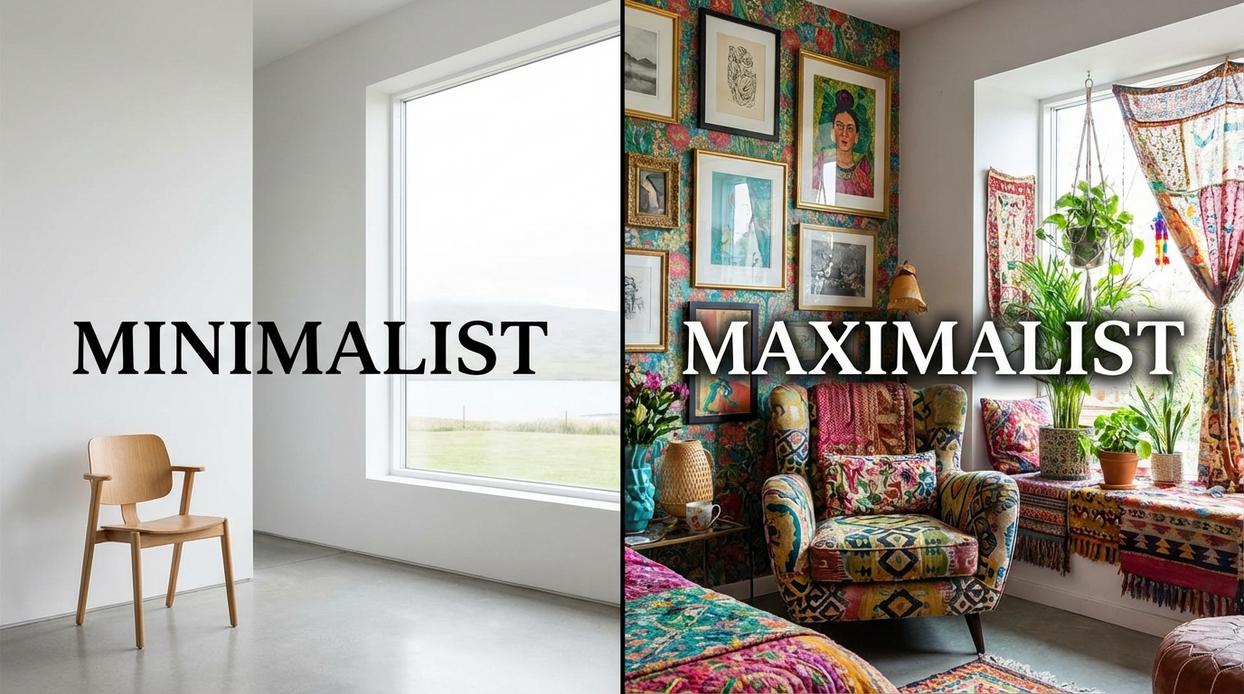
I’ve made mistakes on both ends of the design spectrum. My first apartment was aggressively minimalist—white walls, pale oak floors, one lonely plant. It looked serene in photos. In real life? It felt like I was living inside a blank Instagram template (beautiful, but slightly soulless). Later, I swung hard the other way—patterned rugs, velvet chairs, gallery walls climbing to the ceiling. Cozy, yes. Calm, not exactly.
Here’s what those missteps taught me about minimalist vs maximalist design.
Color Palette
Minimalist spaces lean monochromatic—meaning one dominant color in varied shades—often muted and airy. Think soft grays or warm creams. Maximalist rooms embrace saturated hues, high contrast, and diverse combinations. Jewel tones beside florals beside stripes. I once paired emerald walls with a crimson sofa. Dramatic? Absolutely. Easy to live with daily? Debatable.
Furniture & Form
Minimalism favors clean lines and multi-functional pieces (like storage ottomans that secretly hide clutter). Maximalism celebrates ornate details and statement silhouettes. The lesson: bold pieces need breathing room. Too many “stars” in one room compete like reality TV contestants.
Texture & Pattern
Minimalist rooms rely on subtle, natural textures—linen, wool, visible wood grain. Maximalist interiors layer velvet, silk, animal prints, even chintz. Texture adds depth, but layering without restraint creates visual noise. I learned to vary scale: one large pattern, one medium, one small.
Accessories & Art
Minimalists showcase one or two intentional, large-scale pieces. Maximalists build gallery walls and curated collections. Curated is the key word. Random isn’t charming; it’s confusing.
Maintenance & Lifestyle
Minimalism is easier to clean but demands ruthless decluttering. Maximalism hides dust surprisingly well, yet can feel chaotic without editing. Pro tip: schedule seasonal “style audits” to reassess what truly belongs.
Neither approach is wrong. The mistake is committing blindly without considering how you actually live.
Are you energized by clean surfaces and open space, or do layered rooms make your heart race? Minimal or maximal—what feels like home? If clutter raises your pulse and you crave a serene, hotel-like calm, minimalist vs maximalist design might tilt minimalist for you. But if you collect art, love bold color, and want every wall to tell a story (souvenirs included), maximalism may fit.
Still unsure? Could warm minimalism or edited maximalism be your sweet spot—pared back, yet personal? Explore inspiration in this design guide. Which side sounds like you? Trust your instincts; your space reflects you. Choose boldly.
Now that you understand the framework, the real work begins. In my view, the debate around minimalist vs maximalist design misses the point. A home isn’t a showroom; it’s a support system. Some argue you should commit fully to one style for cohesion. I disagree. Cohesion comes from intention, not restriction. So start small. Choose one room and ask what you want to feel—calm, energized, nostalgic. Then add a single bold gallery wall or clear every surface but one. Think of it like curating your own Hogwarts common room (minus the floating candles). Let the space evolve with you naturally.
As you explore the contrasting worlds of minimalist and maximalist interiors to define your personal style, don’t forget to consider how your choice can also extend into your outdoor spaces — for expert tips on enhancing your garden aesthetics, check out our article ‘Garden Advice Homenumental.’
Designing a Space That Truly Feels Like You
You came here wondering whether minimalist vs maximalist design is the right direction for your home. Now you understand the strengths of both—clean simplicity that brings calm and clarity, and bold abundance that celebrates personality and expression.
The real challenge isn’t choosing a trend. It’s creating a space that solves your frustration—whether that’s visual clutter that stresses you out or a room that feels flat and uninspiring. When your home doesn’t reflect you, it never quite feels right.
The good news? You don’t have to guess your way through it. With the right design approach, you can balance beauty, function, and personality in a way that feels intentional and elevated.
If you’re ready to transform your space into something cohesive, inspiring, and uniquely yours, now’s the time to act. Explore Decad Garden’s expert design inspiration and practical styling guides—trusted by home enthusiasts who want standout spaces without costly mistakes. Start planning your next room refresh today and turn your vision into a home you truly love.