
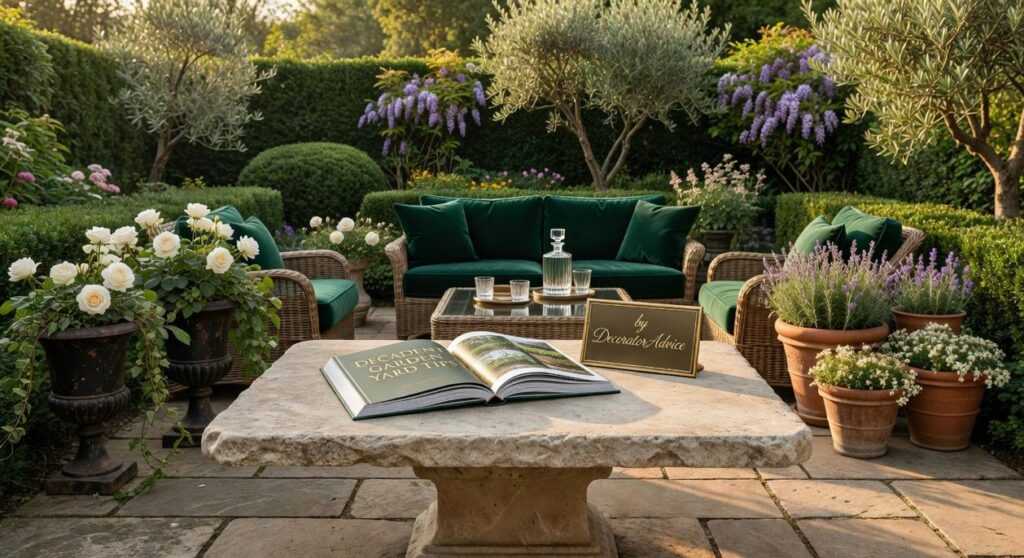
I’ve spent years making living rooms beautiful. Now I do the same thing with gardens.
You probably look at your yard and see a bunch of plants that don’t quite work together. Maybe it feels random. Like you bought things you liked but they never came together as a space.
That’s because most people garden like they’re collecting plants. Not designing a room.
Your garden is another room in your home. It deserves the same attention you give your living room or kitchen.
I use the same principles outside that I use inside. Color palettes. Texture. Flow. The stuff that makes a space feel intentional instead of accidental.
This article shows you how to think like a decorator when you’re working in your garden. You’ll learn how to create cohesion, pick plants that actually work together, and turn your outdoor space into somewhere you want to spend time.
These are decadgarden yard tips by decoratoradvice that work in real backyards, not just in magazines.
No complicated design theory. Just practical ways to make your garden look like you meant it.
The Foundation: Thinking Like a Decorator Outdoors
Most people treat their yard like an afterthought.
They buy plants on impulse at the garden center. They scatter furniture around without a plan. Then they wonder why it all feels disconnected.
I approach it differently.
Your outdoor space deserves the same attention you give your living room. Maybe more, since you can’t just rearrange it on a whim.
Some designers say you should let your garden evolve naturally. Let plants go where they want. Don’t overthink the structure. They claim that rigid planning kills the organic feel of a good garden.
I see their point. Nobody wants a yard that feels sterile or forced.
But here’s what happens without a foundation. You end up with a collection of pretty things that don’t work together. No flow. No purpose. Just stuff.
Start with a style theme. Before you buy anything, decide what your garden’s personality is. Modern? English Cottage? Mediterranean? Minimalist?
This isn’t about limiting yourself. It’s about making choices easier.
When you know your theme, you stop second-guessing every plant and every piece of decor. You have a filter for what fits and what doesn’t.
Think in outdoor rooms. Use planters to create boundaries. Add pathways that guide people through different zones. An outdoor rug can define a dining area just like it would inside.
One space for eating. Another for reading. A third for gathering with friends.
(You wouldn’t put your dining table in the middle of your bedroom, right? Same logic applies outside.)
Build year-round structure. This is what separates amateur gardens from the ones that look good in February.
I’m talking about the bones. Evergreen shrubs that hold their shape. Decorative grasses that catch winter light. Stone paths and pergolas that give your eye something to land on when the flowers are gone.
These are your permanent pieces. Your outdoor furniture, if you will.
Think of it this way. Annuals are throw pillows. They’re fun and you can swap them out. But you need a solid couch first.
At Decadgarden, I see people skip this step all the time. They plant a bunch of perennials and call it done. Then winter hits and their yard looks empty.
Here’s a simple comparison:
Without structure: Your garden is a blank slate in winter. Everything dies back and you’re left staring at dirt until spring.
With structure: You have visual interest twelve months a year. The bones carry you through the off-season while you wait for the color to return.
Which sounds better to you?
The decadgarden yard tips by decoratoradvice approach is straightforward. Treat your outdoor space like an extension of your home. Give it purpose. Give it structure. Then layer in the beauty. To elevate your gaming experience, consider applying the principles of the Decadgarden approach, where your outdoor space becomes an immersive extension of your virtual adventures, blending purpose, structure, and beauty seamlessly. To elevate your gaming experience, consider applying the principles of the Decadgarden approach, where your outdoor space becomes a vibrant extension of your virtual adventures, seamlessly blending purpose, structure, and beauty into every gameplay session.
You don’t need a huge budget for this. You need a plan.
Start with one zone. Define it. Add the structural elements. Then fill in with plants that match your theme.
Do that and you’ll have a garden that actually feels intentional.
Mastering the Palette: Using Color & Texture with Purpose
Most people think garden design is about picking pretty flowers and calling it a day.
Then they wonder why their yard looks like a paint store exploded.
I learned this the hard way. My first attempt at a garden bed looked like I’d let a toddler loose with a crayon box. Every color. Zero plan. It was chaos with petunias.
Here’s what changed everything for me.
Treat your garden like a room. You wouldn’t paint every wall a different color (unless you’re going for that “fun house” vibe). The same rules apply outside.
Pick a color story and stick with it. Cool blues and purples create calm spaces where you actually want to sit. Hot oranges and reds bring energy to areas that need it. But mixing both? That’s where things get messy.
And I’m not just talking about flowers here.
Your pots matter. Your cushions matter. That random garden gnome your aunt gave you? Yeah, that matters too. Everything either supports your palette or fights against it.
Foliage is where the magic happens. Flowers come and go (usually right before your dinner party). But leaves? They stick around.
I use silver foliage next to deep greens. The contrast makes both pop. Chartreuse plants light up shady corners better than any flower I’ve tried. Plus, you look like you know what you’re doing when people visit.
Now here’s the part most gardeners skip.
Texture.
It’s the difference between a space that photographs well and one that makes you want to reach out and touch everything. Soft, feathery ferns next to broad hosta leaves create visual tension that actually works.
Smooth modern planters against rough stone walls. Glossy leaves beside matte finishes. This is decadgarden yard tips by decoratoradvice territory, and it’s what separates amateur setups from spaces that feel intentional.
Think about it. A garden full of round leaves and round pots gets boring fast. But add some spiky grasses or architectural agave? Now you’ve got something worth looking at.
The best part about working with texture is that it costs nothing. You’re just rearranging what you already have (or what you were going to buy anyway).
Start small. Pick three textures for your next decadgarden yard decoration project. One soft, one structural, one somewhere in between. See how they play together before you commit to filling an entire bed.
Your garden doesn’t need more stuff. It needs a plan.
Accessorizing the Outdoors: The Finishing Touches

You’ve done the hard work.
The bones of your outdoor space are solid. Plants are thriving. Pathways make sense. But something’s still missing.
That’s where accessories come in.
I’m not talking about cluttering your yard with garden gnomes (unless that’s your thing). I mean the pieces that turn a functional space into somewhere you actually want to spend time.
Light It Right I go into much more detail on this in Home Tips and Tricks Decadgarden.
Here’s what I think will happen over the next few years. More homeowners will start treating outdoor lighting the same way they treat indoor lighting. Because honestly, why wouldn’t you?
Uplighting works wonders on a good tree. It creates drama after sunset and makes your yard feel bigger than it is. String lights aren’t just for parties anymore. They define spaces and give patios that lived-in feel. Incorporating thoughtful lighting and elements like Decadgarden Yard Decoration can transform your outdoor space into an enchanting retreat that feels both expansive and inviting after dark. Incorporating thoughtful lighting and elements like Decadgarden Yard Decoration can transform your outdoor space into a cozy retreat, inviting relaxation and enhancing the overall aesthetic after dark.
Solar path lights do double duty. They look good and keep you from tripping over your own landscaping at night.
Pots Aren’t Just Containers
Think of planters as sculptures that happen to hold dirt.
I group mine in clusters. Different heights and sizes. The old Rule of Three still works here, even if it feels a bit predictable. What matters is creating a focal point that pulls your eye exactly where you want it.
Empty pots can be just as striking as planted ones. Especially in winter when everything else looks dead.
Textiles That Can Take a Beating
Weather-resistant cushions and outdoor rugs aren’t just about comfort. They absorb sound in ways that hard surfaces can’t. Your patio stops feeling like an echo chamber.
Throws add personality. Color. They tie spaces together without permanent commitment.
And here’s my prediction: outdoor textiles will get better and cheaper as more people realize their yards are extensions of their homes. The materials will improve and the designs will stop looking so obviously “outdoor.”
Every Space Needs a Star
Your yard guide decadgarden approach should include at least one centerpiece per outdoor room.
A water feature creates sound and movement. Fire pits anchor gathering spaces (and extend your season by weeks). A single specimen plant with serious presence can do the job just as well as any sculpture.
I’m betting we’ll see more homeowners choosing living focal points over static ones. A Japanese maple beats a concrete statue every time.
The key is picking one thing and letting it shine. Don’t compete with yourself.
Practical Hacks for a Polished, High-End Look
Want to know the fastest way to make your yard look expensive?
It’s not new plants. It’s not fancy furniture.
It’s edging.
I’m serious. Clean lines along your garden beds and pathways do more for your space than almost anything else. When I walk through a neighborhood, I can spot the difference immediately. Sharp edges say someone cares. Messy ones say the opposite.
Grab an edger and spend 20 minutes. You’ll see what I mean.
Now let’s talk about the ugly stuff. Every yard has it. Trash bins. AC units. That compost pile you swore would look rustic.
(It doesn’t.)
Here’s my move. I use decorative screens or simple trellises to hide what needs hiding. Plant a hedge if you’ve got the space. The goal isn’t perfection but intention. Make it look like you planned it that way.
One more thing that separates amateur designs from professional ones?
Repetition.
Pick a plant and use it multiple times. Choose a color and repeat it. Same material in different spots. This creates rhythm. It makes your yard feel like it belongs together instead of looking like a plant store exploded.
Most people overthink this. They want variety everywhere. But that just creates chaos.
I learned this from Decadgarden yard tips by decoratoradvice. The best designs feel calm because they repeat key elements. Incorporating the serene principles of design from Decadgarden, I discovered that the most effective yard tips emphasize a harmonious repetition of key elements to create a tranquil outdoor space. By embracing the serene principles of design from Decadgarden, I realized that the most effective yard tips focus on a harmonious repetition of key elements to cultivate a tranquil outdoor space.
Try it in your space. You’ll notice the difference right away.
Curate Your Perfect Outdoor Escape
You came here wondering how to turn your yard into something special.
Now you have the framework.
A beautiful garden isn’t about knowing every plant species or having a green thumb. It’s about applying design principles that work.
I’ve shown you how style, zones, color, texture, and accessories create a cohesive space. These aren’t complicated concepts. They’re the same principles that make indoor rooms feel complete.
Your outdoor space should feel like an extension of your home. When you treat it that way, everything clicks into place.
Here’s what I want you to do: Pick one zone in your garden this weekend. Maybe it’s your patio or a corner of your yard that never quite worked.
Apply just one principle from this guide.
Add a pop of color. Layer in some texture. Define the space with a simple accessory.
You’ll see an immediate difference. That’s when you’ll understand how decadgarden yard tips by decoratoradvice actually work in real life (not just in theory).
Start small. Build from there. Your perfect outdoor escape is closer than you think.